
AAFP: Restoration of Competency to Stand Trial in Community Settings
Presented by: Angela Torres, Ph.D., ABPP, and Laura Grossi, PhD, ABSMIP
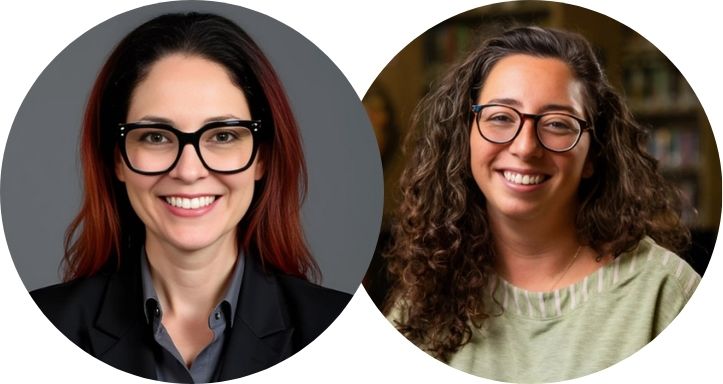 This on-demand professional training program on AAFP: Restoration of Competency to Stand Trial in Community Settings is presented by Angela Torres, Ph.D., ABPP and Laura Grossi, Ph.D., ABSMIP in partnership with American Academy of Forensic Psychology (AAFP).
This program covers aspects of outpatient competency restoration, with a focus on community-based restoration. The program starts with reviewing the history and importance of competency to stand trial, and the reasons behind the development of alternatives to inpatient restoration. It outlines how clinicians should approach community-based restoration, from receipt of a court order to treatment interventions to referral for post-restoration evaluation. This program addresses how to develop a restoration program in the community, strategies for restoration interventions, and appropriate documentation methods.
This program is designed for mental health professionals involved in the restoration of competency to stand trial, with a particular focus on community-based restoration. It is intended to serve professionals at all career stages and with varying levels of familiarity with the topic—whether they are just being introduced to the field or possess advanced knowledge. The content is relevant to both evaluators and treaters engaged in the competency restoration process. Recognizing that, in community settings, individuals such as case managers or emergency services workers—often with little to no forensic experience—may be tasked with restoration responsibilities, the program is designed to be accessible and introductory in nature. While it offers foundational knowledge, it is also applicable to seasoned professionals, particularly those working in public mental health and community-based roles where restoration duties are frequently assigned regardless of prior forensic training.
Upon completion of this training, participants will be able to:

Angela Torres, PhD, ABPP is the Chief Forensic Officer for the Department of Forensic Services at the Virginia Department of Behavioral Health and Developmental Services. In this role, she manages forensic services at the state hospitals, the DBHDS portion of the sexually violent predator program, juvenile justice and behavioral health initiatives, the juvenile competence restoration program, the forensic evaluation oversight system, jail diversion programming, and other state-wide initiatives at the intersection of behavioral health and justice.

Dr. Laura M. Grossi is a licensed clinical psychologist in the Commonwealth of Virginia, who is board certified in serious mental illness (SMI) psychology, and credentialed as a Health Service Psychologist through the National Register. She works as a forensic evaluator at Eastern State Hospital, and in private practice in the Hampton Roads region. She primarily conducts pretrial evaluations of competency to stand trial and mental state at the time of the offense, among other clinical-forensic assessments. She also serves as a direct supervisor for the postdoctoral fellow at ESH, as the Psychology Practicum Training Director, and as Chair of the hospital’s Research & Review Committee.
Key topics covered in this training include:
Introduction to Competency to Stand Trial (CST): Importance, legal history, and criteria for CST
Restoration History: Initially inpatient, later outpatient restoration; identified need for alternatives
General Restoration Information: Includes success rates, length of stay, and predictors of restorability vs. unrestorability
Outpatient Restoration Origin: Started due to restrictive inpatient settings, cost, competency crisis, and lawsuits (Trueblood)
Defendant Routing into Outpatient Restoration: Based on evaluator opinions, legal requirements, and treatment needs
Types of Outpatient Restoration Models: Community-based, residential-based, and jail-based models
Providing Outpatient Restoration: Review court orders, records, assessments, and develop treatment plans
Treatment Planning: Includes case management, medication, psychoeducation, cognitive remediation, and techniques like the Slater Method
Capacity to Assist Counsel: Focus on CBT for psychosis, motivational interviewing, and anger management
Documentation and Communication: Importance of documenting interactions and treatment plans; avoid commenting on alleged offenses; communicate with the court and evaluators

We are proud to partner with the American Academy of Forensic Psychology (AAFP) for this training. AAFP is a non-profit organization of board-certified forensic psychologists whose mission is to contribute to the development and maintenance of forensic psychology as a specialized field of study, research, and practice. The Academy does this by providing high-quality continuing education workshops, providing a forum for the exchange of scientific information among its members, and conferring awards upon outstanding students and practitioners in the field of forensic psychology.
Palo Alto University, Continuing & Professional Studies (CONCEPT) is approved by, recognized by, or maintains sponsorship provider status with the following boards and agencies. We maintain responsibility for all content in our CE/CPD programs. For more information, visit here.
American Psychological Association (APA): Approved sponsor of continuing education for psychologists.
Association of Social Work Boards (ASWB): Approved continuing education provider (ACE program, Provider #1480), 11/22/2023–11/22/2026.
National Board for Certified Counselors (NBCC): Approved Continuing Education Provider (ACEP No. 7190).
Sponsorship Approval Statements
Palo Alto University, Continuing and Professional Studies (CONCEPT) is approved by the American Psychological Association to sponsor continuing education for psychologists. Palo Alto University, Continuing and Professional Studies (CONCEPT) has been approved by NBCC as an Approved Continuing Education Provider, ACEP No. 7190. Programs that do not qualify for NBCC credit are clearly identified. Palo Alto University, #1480, is approved to offer social work continuing education by the Association of Social Work Boards (ASWB) Approved Continuing Education (ACE) program. Organizations, not individual courses, are approved as ACE providers. State and provincial regulatory boards have the final authority to determine whether an individual course may be accepted for continuing education credit. Palo Alto University maintains responsibility for this course. ACE provider approval period 11/22/23-11/22/26. Social workers completing this course receive (clinical or social work ethics) continuing education credits. Continuing and Professional Studies, Palo Alto University, is recognized by the New York State Education Department's State Board for Psychology as an approved provider of continuing education for licensed psychologists #PSY-0103. Palo Alto University, Continuing and Professional Studies (CONCEPT) is solely responsible for all aspects of the programs. Palo Alto University, Continuing & Professional Studies (CONCEPT), is recognized by the New York State Education Department's State Board for Social Work as an approved provider of continuing education for licensed social workers #SW-0356. Palo Alto University, Continuing and Professional Studies, is recognized by the New York State Education Department’s State Board for Mental Health Practitioners as an approved provider of continuing education for licensed mental health counselors. #MHC-0073.