
Preventing Vicarious Trauma (VT), Compassion Fatigue (CF), and Burnout (BO) in Forensic Mental Health
Presented by: Gianni Pirelli, PhD, ABPP
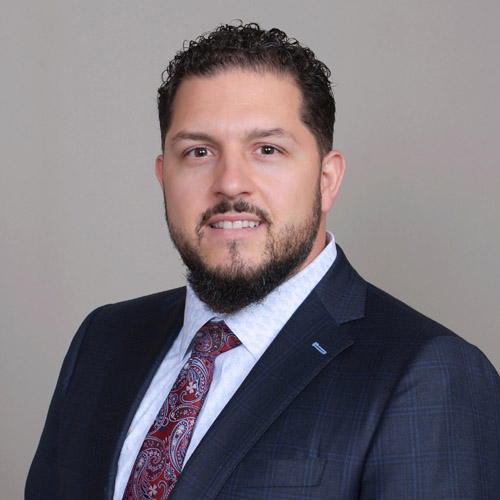 This on-demand professional training program on Preventing Vicarious Trauma (VT), Compassion Fatigue (CF), and Burnout (BO) in Forensic Mental Health is presented by Gianni Pirelli, Ph.D.
In this program, Dr. Pirelli addresses the related yet distinct concepts of vicarious trauma (VT), compassion fatigue (CF), and burnout (BO) within the context of forensic mental health. After providing a general overview of each, he speaks directly to forensic mental health – namely, how these issues can impact participants, trainees, early career professionals (ECPs), supervisors and instructors, and practitioners.
Dr. Pirelli also uses the practice of forensic psychology as an example, addressing relevant research on VT, CF, and BO within the context of criminal, civil, and administrative matters, as well as in treatment, teaching, and research contexts. Then, he highlights four (4) areas of consideration for preventing VT, CF, and BO in the forensic arena: (a) identifying potential risk factors; (b) recognizing, developing, and strengthening protective factors; (c) overcoming self-care and treatment barriers, and (d) identifying and engaging in therapeutic interventions.
Upon completion of this training, participants will be able to:


Dr. Pirelli is Board Certified in Forensic Psychology, and a licensed psychologist in New Jersey, New York, and Pennsylvania. He is a leading expert in the firearms and mental health arena, as well as in forensic psychology practice ethics and procedures. He leads the group practice, Pirelli Clinical and Forensic Psychology, LLC, a team of licensed doctors conducting evaluations in a range of administrative, civil, and criminal matters. Dr. Pirelli has conducted over 1,000 evaluations and testified over 100 times in private practice.
In addition to maintaining a full-time private practice, Dr. Pirelli has remained active in research, training, and professional service. His primary areas of research pertain to forensic mental health assessment (FMHA), ethics and standards of practice in forensic psychology, and guns and mental health. He has given many professional conference presentations and invited talks, and he has numerous publications, including being the lead on three (3) books published by Oxford University Press: The Ethical Practice of Forensic Psychology: A Casebook (2017); The Behavioral Science of Firearms: A Mental Health Perspective on Guns, Suicide, and Violence (2019); and Firearms and Clinical Practice: A Handbook for Medical and Mental Health Professionals (2023).
Dr. Pirelli has also published chapters in seminal texts such as the Handbook of Forensic Psychology (4th Edition), and his articles have been published in leading practice-oriented journals such as the Journal of Forensic Psychiatry and Psychology; the Journal of Forensic Psychology Practice; Professional Psychology: Research and Practice; and Psychology, Public Policy and Law.
Of additional note is Dr. Pirelli’s research has been cited in amicus briefs to the United States Supreme Court and the New York State Court of Appeals, and in the United States Department of Justice (DOJ) President’s Commission on Law Enforcement and the Administration of Justice final report (2020).
Palo Alto University, Continuing & Professional Studies (CONCEPT) is approved by, recognized by, or maintains sponsorship provider status with the following boards and agencies. We maintain responsibility for all content in our CE/CPD programs. For more information, visit here.
American Psychological Association (APA): Approved sponsor of continuing education for psychologists.
Association of Social Work Boards (ASWB): Approved continuing education provider (ACE program, Provider #1480), 11/22/2023–11/22/2026.
Canadian Psychological Association (CPA): Approved to sponsor continuing education for psychologists.
National Board for Certified Counselors (NBCC): Approved Continuing Education Provider (ACEP No. 7190).
Sponsorship Approval Statements
Palo Alto University, Continuing and Professional Studies (CONCEPT) is approved by the American Psychological Association to sponsor continuing education for psychologists. Palo Alto University, Continuing and Professional Studies (CONCEPT), is approved by the Canadian Psychological Association to offer continuing education for psychologists. Palo Alto University, Continuing and Professional Studies (CONCEPT) has been approved by NBCC as an Approved Continuing Education Provider, ACEP No. 7190. Programs that do not qualify for NBCC credit are clearly identified. Palo Alto University, #1480, is approved to offer social work continuing education by the Association of Social Work Boards (ASWB) Approved Continuing Education (ACE) program. Organizations, not individual courses, are approved as ACE providers. State and provincial regulatory boards have the final authority to determine whether an individual course may be accepted for continuing education credit. Palo Alto University maintains responsibility for this course. ACE provider approval period 11/22/23-11/22/26. Social workers completing this course receive (clinical or social work ethics) continuing education credits. Continuing and Professional Studies, Palo Alto University, is recognized by the New York State Education Department's State Board for Psychology as an approved provider of continuing education for licensed psychologists #PSY-0103. Palo Alto University, Continuing and Professional Studies (CONCEPT) is solely responsible for all aspects of the programs. Palo Alto University, Continuing & Professional Studies (CONCEPT), is recognized by the New York State Education Department's State Board for Social Work as an approved provider of continuing education for licensed social workers #SW-0356. Palo Alto University, Continuing and Professional Studies, is recognized by the New York State Education Department’s State Board for Mental Health Practitioners as an approved provider of continuing education for licensed mental health counselors. #MHC-0073.