
Structured Professional Judgment and Racial Disparities in Risk Assessment
Presented by: Neil Hogan, PhD
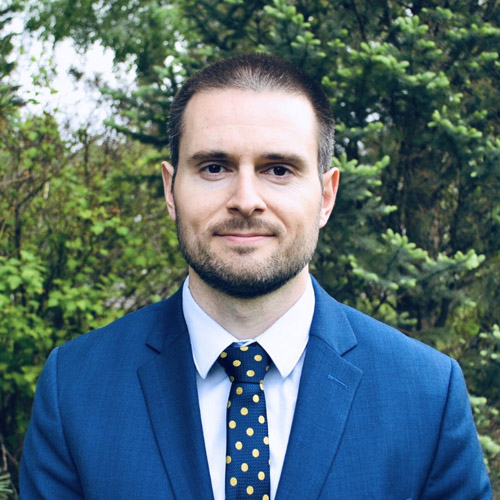
This on-demand professional training program on Structured Professional Judgment and Racial Disparities in Risk Assessment is presented by Neil Hogan, PhD.
This program provides participants with an overview of the first empirical research studies evaluating racial disparities in structured professional judgment (SPJ) risk ratings. The program also identifies specific conceptual and theoretical vulnerabilities to racial biases within the SPJ approach to risk assessment, as well as the defenses of the system.
By the end of the program, participants have an increased understanding of what is known and unknown regarding the strengths and weaknesses of the SPJ model as applied to diverse ethnocultural groups. In turn, participants can make more informed decisions about their own professional work and make informed defenses of SPJ risk ratings in adversarial settings (e.g., if testifying in courts of law).
There are no prerequisite training requirements, but participants may benefit from having prior familiarity with foundational risk assessment, and foundational SPJ trainings. This program is designed to be broadly applicable to persons who conduct, use, or are otherwise influenced by formal risk or threat assessments, across forensic mental health, correctional, policing, and related settings.
Upon completion of this training, participants will be able to:


Dr. Neil Hogan is a Clinical Forensic Psychologist. He is an Adjunct Assistant Professor in the Department of Psychiatry at the University of Alberta, and a professional affiliate of the University of Saskatchewan, as well as the Director of a public sector Threat Assessment program. He has experience providing assessment and treatment services within various correctional, psychiatric, and community settings. Dr. Hogan oversees the education and certification of Threat Assessment professionals, and has provided training to various other groups including: prosecutors, parole board members, police, the judiciary, and other criminal justice professionals. He has published research articles pertaining to: violence risk assessment, policies related to sexual offending populations, the ethics of artificial intelligence in forensic practice, and the applicability of forensic services to historically understudied groups.
Click the Icon Below to View More Programs by this Presenter
Key topics covered in this training include:
Basic risk assessment and structured professional judgment (SPJ) concepts
Controversy and empirical findings regarding racial disparities in risk assessment
New empirical findings related to racial disparities in structured professional judgment risk ratings as applied to Indigenous and non-Indigenous persons, using the HCR-20V3 and SARA-V3
Case studies and theoretical discussion to explain how racial disparities can arise and what their implications are for assessors and others impacted by formal risk assessments
Palo Alto University, Continuing & Professional Studies (CONCEPT) is approved by, recognized by, or maintains sponsorship provider status with the following boards and agencies. We maintain responsibility for all content in our CE/CPD programs. For more information, visit here.
American Psychological Association (APA): Approved sponsor of continuing education for psychologists.
Association of Social Work Boards (ASWB): Approved continuing education provider (ACE program, Provider #1480), 11/22/2023–11/22/2026.
Canadian Psychological Association (CPA): Approved to sponsor continuing education for psychologists.
National Board for Certified Counselors (NBCC): Approved Continuing Education Provider (ACEP No. 7190).
Sponsorship Approval Statements
Palo Alto University, Continuing and Professional Studies (CONCEPT) is approved by the American Psychological Association to sponsor continuing education for psychologists. Palo Alto University, Continuing and Professional Studies (CONCEPT), is approved by the Canadian Psychological Association to offer continuing education for psychologists. Palo Alto University, Continuing and Professional Studies (CONCEPT) has been approved by NBCC as an Approved Continuing Education Provider, ACEP No. 7190. Programs that do not qualify for NBCC credit are clearly identified. Palo Alto University, #1480, is approved to offer social work continuing education by the Association of Social Work Boards (ASWB) Approved Continuing Education (ACE) program. Organizations, not individual courses, are approved as ACE providers. State and provincial regulatory boards have the final authority to determine whether an individual course may be accepted for continuing education credit. Palo Alto University maintains responsibility for this course. ACE provider approval period 11/22/23-11/22/26. Social workers completing this course receive (clinical or social work ethics) continuing education credits. Continuing and Professional Studies, Palo Alto University, is recognized by the New York State Education Department's State Board for Psychology as an approved provider of continuing education for licensed psychologists #PSY-0103. Palo Alto University, Continuing and Professional Studies (CONCEPT) is solely responsible for all aspects of the programs. Palo Alto University, Continuing & Professional Studies (CONCEPT), is recognized by the New York State Education Department's State Board for Social Work as an approved provider of continuing education for licensed social workers #SW-0356. Palo Alto University, Continuing and Professional Studies, is recognized by the New York State Education Department’s State Board for Mental Health Practitioners as an approved provider of continuing education for licensed mental health counselors. #MHC-0073.