
Specialized Violence: Honor-Based Violence
Presented by: P. Randall Kropp, PhD
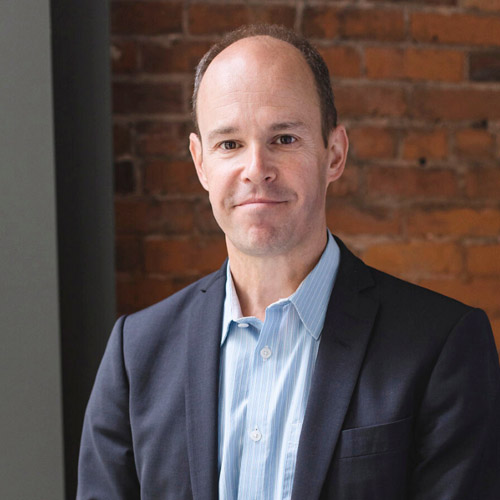 This on-demand professional training program on Specialized Violence: Honor-Based Violence is presented by P. Randall Kropp, PhD, in partnership with Protect International Risk and Safety Services.
In recent years, there has been increased attention to behavior that is specifically, or in part, motivated by honor. With this heightened awareness, there has been considerable debate regarding concerns that the term “honor-based violence” is culturally-bound or denotes “honorable” behavior. This program provides a conceptual and definitional overview of honor-based violence to address these concerns. Further, the need for specific risk assessment guidelines is reviewed, along with general principles and best practices regarding the assessment and management of honor-based violence. There is also a discussion of particular approaches used for assessing and managing honor-based violence, including the PATRIARCH, a set of structured professional judgment guidelines for evaluating risk for honor-based violence. Finally, a case example is used to illustrate the use of PATRIARCH in practice.
Upon completion of this training, participants will be able to:


Dr. P. Randall Kropp is a clinical and forensic psychologist specializing in the assessment and management of violent offenders. He works as a threat assessment specialist for Protect International Inc., is a psychologist with the Forensic Psychiatric Services Commission of British Columbia, Canada, and is Adjunct Professor of Psychology at Simon Fraser University. He has conducted numerous workshops for mental health professionals, police officers, corrections staff, and others in North America, Australia, Asia, Africa, and Europe. This training has focused on violence risk assessment, domestic violence, and criminal harassment (stalking). He has frequently consulted with provincial, state, and federal government ministries on matters related to violence against women and children, and the assessment and treatment of violent offenders. He has published numerous journal articles, book chapters, and research reports, and he is co-author to several works on risk assessment, including the Manual for the Spousal Assault Risk Assessment Guide, Version 3 (SARA-V3), the Brief Spousal Assault Form for the Evaluation of Risk (B-SAFER), the Manual for the Sexual Violence Risk – 20, the Risk for Sexual Violence Protocol (RSVP), the Guidelines for Stalking Assessment and Management (SAM); and the Assessment of Risk for Honour Based Violence (PATRIARCH).

We are proud to partner with Protect International Risk and Safety Services for this training. Protect International's threat assessment professionals are internationally recognized experts that have developed some of the world's most widely used and best-validated threat assessment tools. Protect International provides services and products related to violence risk assessment and management, also known as threat assessment and management. Protect International services and products include threat assessment training and support, case assessment and management, legal consultation, policy review and development, and program evaluation and research; along with threat assessment manuals, worksheets, licenses, and software applications for those tools.
Palo Alto University, Continuing & Professional Studies (CONCEPT) is approved by, recognized by, or maintains sponsorship provider status with the following boards and agencies. We maintain responsibility for all content in our CE/CPD programs. For more information, visit here.
American Psychological Association (APA): Approved sponsor of continuing education for psychologists.
Association of Social Work Boards (ASWB): Approved continuing education provider (ACE program, Provider #1480), 11/22/2023–11/22/2026.
Canadian Psychological Association (CPA): Approved to sponsor continuing education for psychologists.
National Board for Certified Counselors (NBCC): Approved Continuing Education Provider (ACEP No. 7190).
Sponsorship Approval Statements
Palo Alto University, Continuing and Professional Studies (CONCEPT) is approved by the American Psychological Association to sponsor continuing education for psychologists. Palo Alto University, Continuing and Professional Studies (CONCEPT), is approved by the Canadian Psychological Association to offer continuing education for psychologists. Palo Alto University, Continuing and Professional Studies (CONCEPT) has been approved by NBCC as an Approved Continuing Education Provider, ACEP No. 7190. Programs that do not qualify for NBCC credit are clearly identified. Palo Alto University, #1480, is approved to offer social work continuing education by the Association of Social Work Boards (ASWB) Approved Continuing Education (ACE) program. Organizations, not individual courses, are approved as ACE providers. State and provincial regulatory boards have the final authority to determine whether an individual course may be accepted for continuing education credit. Palo Alto University maintains responsibility for this course. ACE provider approval period 11/22/23-11/22/26. Social workers completing this course receive (clinical or social work ethics) continuing education credits. Continuing and Professional Studies, Palo Alto University, is recognized by the New York State Education Department's State Board for Psychology as an approved provider of continuing education for licensed psychologists #PSY-0103. Palo Alto University, Continuing and Professional Studies (CONCEPT) is solely responsible for all aspects of the programs. Palo Alto University, Continuing & Professional Studies (CONCEPT), is recognized by the New York State Education Department's State Board for Social Work as an approved provider of continuing education for licensed social workers #SW-0356. Palo Alto University, Continuing and Professional Studies, is recognized by the New York State Education Department’s State Board for Mental Health Practitioners as an approved provider of continuing education for licensed mental health counselors. #MHC-0073.