
LIVE: The Aging Mind in Court: Cognition and Forensic Mental Health Assessment
Presented by: Chriscelyn Tussey, PsyD, ABPP
December 3, 2026 | 9:00 AM - 1:00 PM Pacific
4 Hours | 4 CEs
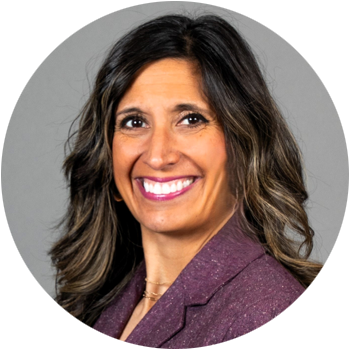 Chriscelyn Tussey, PsyD, ABPP, presents a live virtual professional training program on The Aging Mind in Court: Cognition and Forensic Mental Health Assessment in partnership with the American Academy of Forensic Psychology (AAFP).
Older adults represent a rapidly growing segment of the population, and forensic mental health professionals are increasingly likely to encounter questions involving cognition, functional decline, and age-related neurological conditions. Differentiating normative aging from clinically meaningful cognitive change and determining when that distinction matters to a psycholegal question can be challenging.
This four-hour program will provide a practical framework for understanding and addressing neuropsychological issues that arise in FMHA of older adults. Participants will review cognitive changes associated with normative aging and distinguish these from patterns associated with mild cognitive impairment, neurodegenerative disorders, and other neurological, psychiatric, and medical conditions. Particular attention will be given to how these conditions may affect legally relevant abilities and their implications for forensic questions involving, for example, competency, criminal responsibility, and capacity.
The program will also address practical considerations when evaluating older adults. Through case examples and interactive discussion, participants will practice determining when cognitive findings meaningfully inform a forensic opinion and when neuropsychological consultation or referral may be warranted. Ethical considerations will be integrated throughout. Participants will leave with a practical framework for incorporating aging-related cognitive findings into forensic assessment and decision-making.
This program is appropriate for any career stage, but most appropriate for those with minimal to moderate experience working with this population. It is likely not ideal for those who already specialize and have many years of experience working with an aging population.
Upon completion of this training, participants will be able to:


Chriscelyn Tussey, PsyD, ABPP, is the President and Founder of Metropolitan Forensic & Neuropsychological Consultation, an independent practice in New York City. She is a Clinical Neuropsychologist and Board-Certified Forensic Psychologist who conducts clinical, civil, and criminal forensic and forensic neuropsychological evaluations. Dr. Tussey is a Clinical Instructor at New York University (NYU) Grossman School of Medicine and an Adjunct Professor in the graduate psychology programs at NYU and Teachers College, Columbia University. She has published and presented in the areas of forensic psychology, neuropsychology, leadership, and brain health. Dr. Tussey has also held local and national leadership positions in both forensic and neuropsychological organizations. She is currently on the Board of Directors as the Secretary for the American Academy of Forensic Psychology (AAFP). She is also honored to be a member of the editorial team for the updated Oxford University Press Book Series, Best Practices in Forensic Mental Health Assessment. Dr. Tussey is a Fellow of the National Academy of Neuropsychology (NAN), where she serves on the Leadership Ambassador Development Program (LEAD) Task Force, and developed and instructs an online course, Fundamentals of Forensic Psychology for Neuropsychologists. At the state level, she has served on the Board of Directors of the New York State Association of Neuropsychology (NYSAN) and is currently a member of the Science Initiative Committee.
Click the Icon Below to View More Programs by this Presenter

We are proud to partner with the American Academy of Forensic Psychology (AAFP) for this training. AAFP is a non-profit organization of board-certified forensic psychologists whose mission is to contribute to the development and maintenance of forensic psychology as a specialized field of study, research, and practice. The Academy does this by providing high-quality continuing education workshops, providing a forum for the exchange of scientific information among its members, and conferring awards upon outstanding students and practitioners in the field of forensic psychology.
Palo Alto University, Continuing & Professional Studies (CONCEPT) is approved by, recognized by, or maintains sponsorship provider status with the following boards and agencies. We maintain responsibility for all content in our CE/CPD programs. For more information, visit here.
American Psychological Association (APA): Approved sponsor of continuing education for psychologists.
Association of Social Work Boards (ASWB): Approved continuing education provider (ACE program, Provider #1480), 11/22/2023–11/22/2026.
Canadian Psychological Association (CPA): Approved to sponsor continuing education for psychologists.
National Board for Certified Counselors (NBCC): Approved Continuing Education Provider (ACEP No. 7190).
Palo Alto University, Continuing and Professional Studies (CONCEPT) is approved by the American Psychological Association to sponsor continuing education for psychologists. Palo Alto University, Continuing and Professional Studies (CONCEPT), is approved by the Canadian Psychological Association to offer continuing education for psychologists. Palo Alto University, Continuing and Professional Studies (CONCEPT) has been approved by NBCC as an Approved Continuing Education Provider, ACEP No. 7190. Programs that do not qualify for NBCC credit are clearly identified. Palo Alto University, #1480, is approved to offer social work continuing education by the Association of Social Work Boards (ASWB) Approved Continuing Education (ACE) program. Organizations, not individual courses, are approved as ACE providers. State and provincial regulatory boards have the final authority to determine whether an individual course may be accepted for continuing education credit. Palo Alto University maintains responsibility for this course. ACE provider approval period 11/22/23-11/22/26. Social workers completing this course receive (clinical or social work ethics) continuing education credits. Continuing and Professional Studies, Palo Alto University, is recognized by the New York State Education Department's State Board for Psychology as an approved provider of continuing education for licensed psychologists #PSY-0103. Palo Alto University, Continuing and Professional Studies (CONCEPT) is solely responsible for all aspects of the programs. Palo Alto University, Continuing & Professional Studies (CONCEPT), is recognized by the New York State Education Department's State Board for Social Work as an approved provider of continuing education for licensed social workers #SW-0356. Palo Alto University, Continuing and Professional Studies, is recognized by the New York State Education Department’s State Board for Mental Health Practitioners as an approved provider of continuing education for licensed mental health counselors. #MHC-0073.