
Report Writing for Forensic Mental Health
Presented by: Randy Otto, PhD, ABPP
June 26, 2026 | 9:00 AM - 5:00 PM Pacific
8 Hours | 7 CEs
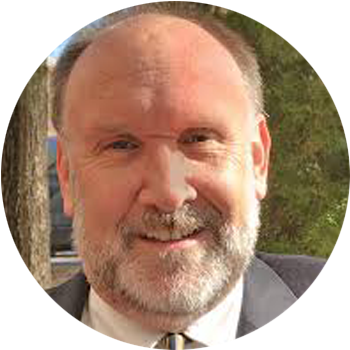
Randy Otto, PhD, ABPP, presents a live virtual professional training program on Report Writing for Forensic Mental Health.
This badge-earning program can be shared digitally on platforms like LinkedIn or your resume and counts towards various certificates. Enroll to earn credit and share your new digital credentials with prospective employers and colleagues. This program counts as a foundational program in the certificates:
Conducting well-constructed forensic evaluations is not enough to persuade judges, attorneys, and other referral sources about the adequacy of one’s work and opinions. Reports and affidavits are the primary vehicles by which psychologists, psychiatrists, and other mental health professionals communicate to their audience data they were provided and gathered, how they became involved in the litigation, the evaluation techniques they employed, the opinions they formed, and their underlying reasoning. Thus, writing clear and concise reports is critical to most forensic examiners’ practice.
This program begins with a discussion of the value of writing reports, followed by the identification of the obligations that the law and professional sources of authority impose on forensic mental health professionals when writing reports. Next, considerable time is devoted to discussing various principles of report writing- including issues in contemplating use of AI when writing reports, followed by presentation review of two very different kinds of report formats and all components that are common to reports (i.e., Referral Question, Notification, Sources of Information, Behavioral Observations/Mental Status, Relevant History, Test Results, Psycholegal Question, Opinions & Recommendations). More focused matters, such as the use and avoidance of jargon; specificity in word choice; distinguishing between facts, observations, and inferences; word tense, report presentation, and style, and common report writing errors are also considered. Finally, preparing affidavits and understanding how their structure and substance differ from reports is tackled.
This course is appropriate for beginner, intermediate, and advanced mental health and other allied professionals.
Upon completion of this training, participants will be able to:


Randy K. Otto, PhD, MLS, joined the faculty in the Department of Psychiatry & Behavioral Sciences at the University of New Mexico School of Medicine in May 2025, where he serves as Professor and Chief of the Division of Forensic Behavioral Sciences. Dr. Otto was a member of the faculty at the University of South Florida between 1989 and 2022, and Nova Southeastern University between 2022 and 2025.
Dr. Otto, licensed to practice psychology in New Mexico and Florida, is board certified in clinical psychology and forensic psychology by the American Board of Professional Psychology. He earned a bachelor’s degree in psychology from the University of Rochester, and masters and doctoral degrees in clinical psychology from Florida State University. After serving as a clinical psychology intern at the Medical University of South Carolina, he completed a two year, NIMH-funded fellowship in the College of Law and Department of Psychology at the University of Nebraska, where he was awarded a master’s degree in legal studies.
Dr. Otto’s research, writing, and practice is devoted to matters of forensic psychological assessment. In press is the fifth edition of Psychological Evaluations for the Courts: A Handbook for Mental Health Professionals and Lawyers, which he co-authored with co-authors Chris Slobogin, John Petrila, and Lois Oberlander. With Irv Weiner, he edited the fourth edition of the Handbook of Forensic Psychology, and he is also the lead author of books devoted to forensic practice ethics and forensic report writing and testimony. Dr. Otto chaired the APA committee that revised the Specialty Guidelines on Forensic Psychology that were adopted in 2013. He serves as a consultant to the committee that is working on the current revision. He chaired APA's Committee on Legal Issues and served on the ABA committee that revised the Criminal Justice Mental Health Standards. He was the lead author of the book, Ethics in Forensic Psychology Practice.
Key topics covered in this training include:
Research on forensic examiners’ report-writing practices is reviewed considering how forensic practice guidelines, the ethics code, and rules of evidence/procedure shape reports.
Principles for the organization and structure of forensic reports are reviewed highlighting elements of good and bad reports with examples.
Discussion of various principles of report writing- including issues in contemplating use of AI when writing reports
Jargon, specificity in word choice, identifying sources of information, distinguishing between observation and inference, and common report writing errors are discussed.
Preparation of affidavits, and how their structure and substance differs from reports, is tackled.

Palo Alto University, Continuing & Professional Studies (CONCEPT) is approved by, recognized by, or maintains sponsorship/ provider status with the following boards and agencies. We maintain responsibility for all content in our CE/CPD programs. For more information, visit here.
American Psychological Association (APA): Approved sponsor of continuing education for psychologists.
Association of Social Work Boards (ASWB): Approved continuing education provider (ACE program, Provider #1480), 11/22/2023–11/22/2026.
Canadian Psychological Association (CPA): Approved to sponsor continuing education for psychologists.
National Board for Certified Counselors (NBCC): Approved Continuing Education Provider (ACEP No. 7190).
Palo Alto University, Continuing and Professional Studies (CONCEPT) is approved by the American Psychological Association to sponsor continuing education for psychologists. Palo Alto University, Continuing and Professional Studies (CONCEPT) maintains responsibility for this program and its content. Palo Alto University, Continuing and Professional Studies (CONCEPT) is approved by the Canadian Psychological Association to offer continuing education for psychologists. Palo Alto University, Continuing and Professional Studies (CONCEPT), SW CPE is recognized by the New York State Education Department’s State Board for Social Work as an approved provider of continuing education for licensed social workers #SW-0356 and the New York State Education Department’s State Board for Mental Health Practitioners as an approved provider of continuing education for licensed mental health counselors. #MHC-0073. Palo Alto University, Continuing and Professional Studies (CONCEPT) has been approved by NBCC as an Approved Continuing Education Provider, ACEP No. 6811. Programs that do not qualify for NBCC credit are clearly identified. CONCEPT Professional Training, #1480, is approved to offer social work continuing education by the Association of Social Work Boards (ASWB) Approved Continuing Education (ACE) program. Organizations, not individual courses, are approved as ACE providers. State and provincial regulatory boards have the final authority to determine whether an individual course may be accepted for continuing education credit. CONCEPT Professional Training maintains responsibility for this course. ACE provider approval period: 11/22/23-11/22/26. Social workers completing this course receive (clinical or social work ethics) continuing education credits.