
Evidence for Forensic Mental Health Professionals
Presented by: David DeMatteo, JD, PhD, ABPP
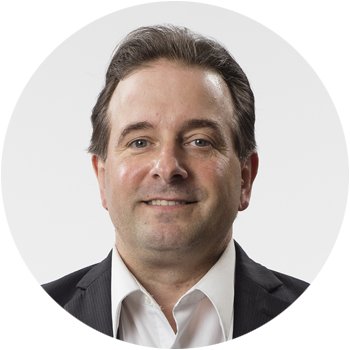 This on-demand professional training program on Evidence for Forensic Mental Health Professionals is presented by David DeMatteo, JD, PhD, ABPP.
This badge-earning program can be shared digitally on platforms like LinkedIn or your resume and counts towards various certificates. Enroll to earn credit and share your new digital credentials with prospective employers and colleagues. This program counts as a foundational program in the certificates:
This program focuses on legal concepts for forensic mental health professionals. After providing a primer on the structure of the United States court system, this program address legal concepts commonly encountered by forensic+ mental health professionals in both criminal and civil legal contexts, including admissibility standards for expert evidence, the legal foundation of expert testimony, discovery, expert reliance on inadmissible evidence (e.g., hearsay), responding to subpoenas, protecting test security (e.g., protective orders), ethics and professionalism, best-practice standards related to cross-examination, expert immunity, and diversity-related considerations.
The program includes discussion of governing case law (e.g., Daubert, Frye), various rules of evidence (e.g., Federal Rules of Evidence, Federal Rules of Civil Procedure), and applicable ethical/practice guidance (e.g., Specialty Guidelines for Forensic Psychology).
This program is intended for forensic mental health clinicians (psychologists, psychiatrists, and social workers) at all stages of their careers. The training is most useful for mental health professionals who conduct forensic mental health assessments in criminal and/or civil areas, and it is relevant to forensic mental health professionals in a variety of settings (e.g., private practice, correctional facility).
Upon completion of this training, participants will be able to:


David DeMatteo, JD, PhD, ABPP (Forensic), is a Professor of Psychology and Professor of Law at Drexel University, and Director of Drexel’s JD/PhD Program in Law & Psychology. He has published 14 books, more than 100 peer-reviewed articles, and more than 50 book chapters in his areas of interest, which include mental health law, psychopathic personality, forensic mental health assessment, and diversion of justice-involved individuals. He is a former President of the American Psychology-Law Society (APA Division 41) and the American Board of Forensic Psychology. He is also a Fellow of the American Psychological Association (Divisions 1, 12, and 41) and the American Academy of Forensic Psychology. He routinely consults with city agencies, state agencies, policymakers, correctional facilities, and law enforcement. He conducts forensic mental health assessments of adults and adolescents on a variety of legal issues, and he has testified as an expert witness in state and federal courts. He is the Editor-in-Chief of Law and Human Behavior.
Click the Icon Below to View More Programs by this Presenter
Key topics covered in this training include:
Legal primer (basics of the U.S. legal system)
Roles of experts in legal proceedings
Rules of evidence that govern the recognition of experts & admissibility of expert evidence
Reliance on inadmissible evidence (e.g., hearsay)
Responding to subpoenas
Discovery (e.g., protecting test security)
Strategies for experts during testimony
Expert immunity

Palo Alto University, Continuing & Professional Studies (CONCEPT) is approved by, recognized by, or maintains sponsorship provider status with the following boards and agencies. We maintain responsibility for all content in our CE/CPD programs. For more information, visit here.
American Psychological Association (APA): Approved sponsor of continuing education for psychologists.
Association of Social Work Boards (ASWB): Approved continuing education provider (ACE program, Provider #1480), 11/22/2023–11/22/2026.
Canadian Psychological Association (CPA): Approved to sponsor continuing education for psychologists.
National Board for Certified Counselors (NBCC): Approved Continuing Education Provider (ACEP No. 7190).
Sponsorship Approval Statements
Palo Alto University, Continuing and Professional Studies (CONCEPT) is approved by the American Psychological Association to sponsor continuing education for psychologists. Palo Alto University, Continuing and Professional Studies (CONCEPT), is approved by the Canadian Psychological Association to offer continuing education for psychologists. Palo Alto University, Continuing and Professional Studies (CONCEPT) has been approved by NBCC as an Approved Continuing Education Provider, ACEP No. 7190. Programs that do not qualify for NBCC credit are clearly identified. Palo Alto University, #1480, is approved to offer social work continuing education by the Association of Social Work Boards (ASWB) Approved Continuing Education (ACE) program. Organizations, not individual courses, are approved as ACE providers. State and provincial regulatory boards have the final authority to determine whether an individual course may be accepted for continuing education credit. Palo Alto University maintains responsibility for this course. ACE provider approval period 11/22/23-11/22/26. Social workers completing this course receive (clinical or social work ethics) continuing education credits. Continuing and Professional Studies, Palo Alto University, is recognized by the New York State Education Department's State Board for Psychology as an approved provider of continuing education for licensed psychologists #PSY-0103. Palo Alto University, Continuing and Professional Studies (CONCEPT) is solely responsible for all aspects of the programs. Palo Alto University, Continuing & Professional Studies (CONCEPT), is recognized by the New York State Education Department's State Board for Social Work as an approved provider of continuing education for licensed social workers #SW-0356. Palo Alto University, Continuing and Professional Studies, is recognized by the New York State Education Department’s State Board for Mental Health Practitioners as an approved provider of continuing education for licensed mental health counselors. #MHC-0073.