
Evaluation of Risk for Sexual Violence: RSVP & SVR-20 V2
Presented by: Stephen D. Hart, PhD
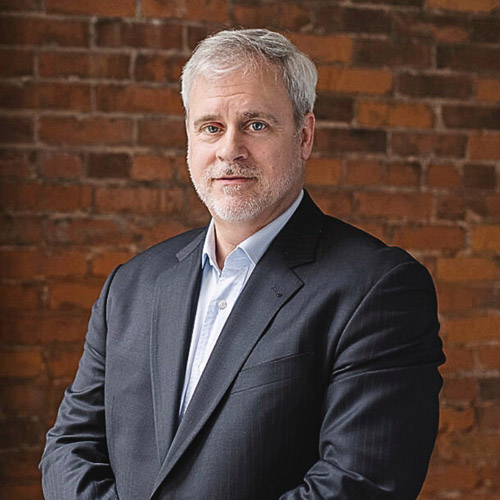 This on-demand professional training program on the Evaluation of Risk for Sexual Violence using the Risk for Sexual Violence Protocol (RSVP) and the Sexual Violence Risk-20 Version 2 (SVR-20 V2) is presented by Stephen D. Hart, Ph.D., in partnership with Protect International Risk and Safety Services.
Sexual violence—and, in particular, the diversity of both sexual violence and the people who commit sexual violence—presents tremendous challenges for professionals responsible for assessment and treatment. Actuarial risk assessment methods, which focus on identifying risk levels based on statistical profiles, do little to help identify critical risk factors or develop management plans in a given case. In this program, Dr. Hart discusses the use of structured professional judgment (SPJ) guidelines in sexual violence risk assessment. He begins by reviewing the SPJ approach, highlighting its potential strengths in developing case formulations and management plans. Next, he describes two sets of SPJ guidelines —the Sexual Violence Risk-20 Version 2 (SVR-20 V2) and the Risk for Sexual Violence Protocol (RSVP) —and their administrative procedures, focusing on their application to developing formulations (case conceptualizations) and management plans. Finally, participants practice administering the SVR-20 V2 and RSVP in two case studies.
Upon completion of this training, participants will be able to:


Dr. Stephen D. Hart obtained BA, MA, and Ph.D. degrees in psychology at the University of British Columbia. He has been on faculty in the Department of Psychology at Simon Fraser University since 1990 and has held the rank of Professor since 2001. He also served as a Visiting Professor in the Faculty of Psychology at the University of Bergen in Norway between 2000 and 2021. His expertise is in the field of clinical-forensic psychology, with a special focus on the assessment of violence risk and psychopathic personality disorder. He has co-authored more than 250 books, chapters, and articles. He has served as editor of two scientific journals, a member of the editorial board of eight journals, and an ad hoc reviewer for more than 40 journals. He has served as an executive committee member of several professional organizations, including the President of the American Psychology-Law Society and the International Association of Forensic Mental Health Services. He has received various distinctions for his professional work, including the Career Achievement Award from the Society of Clinical Psychology, the Saleem Shah Award for Early Career Research Excellence in Psychology and Law from the American Psychology-Law Society and the American Academy of Forensic Psychology, and the Distinguished Achievement Award from the Association of Threat Assessment Professionals. He maintains an active practice in violence risk assessment. He has consulted with government agencies from more than 25 countries; led more than 500 training workshops around the world; and given expert evidence before courts, tribunals, inquests, review boards, and parliamentary committees in Canada, the United States, and the United Kingdom.
Click the Icon Below to View More Programs by this Presenter

We are proud to partner with Protect International Risk and Safety Services for this training. Protect International's threat assessment professionals are internationally recognized experts that have developed some of the world's most widely used and best-validated threat assessment tools. Protect International provides services and products related to violence risk assessment and management, also known as threat assessment and management. Protect International services and products include threat assessment training and support, case assessment and management, legal consultation, policy review and development, and program evaluation and research; along with threat assessment manuals, worksheets, licenses, and software applications for those tools.
Palo Alto University, Continuing & Professional Studies (CONCEPT) is approved by, recognized by, or maintains sponsorship provider status with the following boards and agencies. We maintain responsibility for all content in our CE/CPD programs. For more information, visit here.
American Psychological Association (APA): Approved sponsor of continuing education for psychologists.
Association of Social Work Boards (ASWB): Approved continuing education provider (ACE program, Provider #1480), 11/22/2023–11/22/2026.
Canadian Psychological Association (CPA): Approved to sponsor continuing education for psychologists.
National Board for Certified Counselors (NBCC): Approved Continuing Education Provider (ACEP No. 7190).
Sponsorship Approval Statements
Palo Alto University, Continuing and Professional Studies (CONCEPT) is approved by the American Psychological Association to sponsor continuing education for psychologists. Palo Alto University, Continuing and Professional Studies (CONCEPT), is approved by the Canadian Psychological Association to offer continuing education for psychologists. Palo Alto University, Continuing and Professional Studies (CONCEPT) has been approved by NBCC as an Approved Continuing Education Provider, ACEP No. 7190. Programs that do not qualify for NBCC credit are clearly identified. Palo Alto University, #1480, is approved to offer social work continuing education by the Association of Social Work Boards (ASWB) Approved Continuing Education (ACE) program. Organizations, not individual courses, are approved as ACE providers. State and provincial regulatory boards have the final authority to determine whether an individual course may be accepted for continuing education credit. Palo Alto University maintains responsibility for this course. ACE provider approval period 11/22/23-11/22/26. Social workers completing this course receive (clinical or social work ethics) continuing education credits. Continuing and Professional Studies, Palo Alto University, is recognized by the New York State Education Department's State Board for Psychology as an approved provider of continuing education for licensed psychologists #PSY-0103. Palo Alto University, Continuing and Professional Studies (CONCEPT) is solely responsible for all aspects of the programs. Palo Alto University, Continuing & Professional Studies (CONCEPT), is recognized by the New York State Education Department's State Board for Social Work as an approved provider of continuing education for licensed social workers #SW-0356. Palo Alto University, Continuing and Professional Studies, is recognized by the New York State Education Department’s State Board for Mental Health Practitioners as an approved provider of continuing education for licensed mental health counselors. #MHC-0073.