
AAFP: Advanced Topics in the Assessment of Competency to Stand Trial - Part 3
Presented by: Terry kukor, PhD, ABPP, and Lori L. Hauser, PhD, ABPP
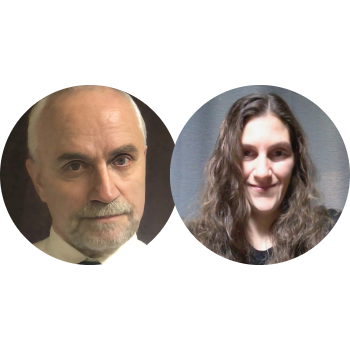 This on-demand professional training program on the Advanced Topics in the Assessment of Competency to Stand Trial - Part 3: Complications, Predicting Restoration, and Report Writing is presented by Terry Kukor, PhD, ABPP, and Lori L. Hauser, PhD, ABPP, in partnership with the American Academy of Forensic Psychology (AAFP).
This training is part 3 of the three-part series on Assessment of Competency to Stand Trial. This training continues to focus on factors that are seldom addressed in training on competency assessments. Assessments of competency can be complicated by issues such as the shelf-life or qualified nature of our competency opinions, differentiating ability from capacity (and both from willingness ), and other unique presenting factors (e.g., amnesia, substance use, language/culture, etc.) or specific questions (e.g., waiving various rights).
When opining that an examinee is incompetent, courts typically expect an opinion about restorability. To this end, we emphasize the acquisition and careful consideration of data points most relevant to the restoration issue. Lastly, efficient and effective report-writing is discussed, emphasizing a model that maximizes objectivity as well as data relevance and necessity.
Participants are strongly encouraged to complete Part 1 and Part 2 training before registering for this training. Register for both programs below.
This is not an introductory training on competency assessment. The target audience includes forensic mental health professionals at any stage in their career, provided they have some basic understanding of the fundamentals of competency assessment.
Upon completion of this training, participants will be able to:

Terry Kukor, Ph.D., ABPP, is board certified in forensic psychology by the American Board of Professional Psychology. In late 2023 he retired from his salaried position at the Netcare Forensic Center in Columbus, Ohio, where he had held a variety of roles including Director of Forensic Services, Senior Forensic Psychologist, and Training Director for the Postdoctoral Fellowship in Forensic Psychology. He is now in independent practice.

Lori L. Hauser, PhD, ABPP, is a board-certified forensic psychologist employed at Whiting Forensic Hospital in Middletown, Connecticut. There, she oversees the competency restoration service and conducts forensic evaluations – competency, as well as general and sexual violence risk management – for the hospital.

We are proud to partner with the American Academy of Forensic Psychology (AAFP) for this training. AAFP is a non-profit organization of board-certified forensic psychologists whose mission is to contribute to the development and maintenance of forensic psychology as a specialized field of study, research, and practice. The Academy does this by providing high-quality continuing education workshops, providing a forum for the exchange of scientific information among its members, and conferring awards upon outstanding students and practitioners in the field of forensic psychology.
Palo Alto University, Continuing & Professional Studies (CONCEPT) is approved by, recognized by, or maintains sponsorship provider status with the following boards and agencies. We maintain responsibility for all content in our CE/CPD programs. For more information, visit here.
American Psychological Association (APA): Approved sponsor of continuing education for psychologists.
Association of Social Work Boards (ASWB): Approved continuing education provider (ACE program, Provider #1480), 11/22/2023–11/22/2026.
National Board for Certified Counselors (NBCC): Approved Continuing Education Provider (ACEP No. 7190).
Sponsorship Approval Statements
Palo Alto University, Continuing and Professional Studies (CONCEPT) is approved by the American Psychological Association to sponsor continuing education for psychologists. Palo Alto University, Continuing and Professional Studies (CONCEPT) has been approved by NBCC as an Approved Continuing Education Provider, ACEP No. 7190. Programs that do not qualify for NBCC credit are clearly identified. Palo Alto University, #1480, is approved to offer social work continuing education by the Association of Social Work Boards (ASWB) Approved Continuing Education (ACE) program. Organizations, not individual courses, are approved as ACE providers. State and provincial regulatory boards have the final authority to determine whether an individual course may be accepted for continuing education credit. Palo Alto University maintains responsibility for this course. ACE provider approval period 11/22/23-11/22/26. Social workers completing this course receive (clinical or social work ethics) continuing education credits. Continuing and Professional Studies, Palo Alto University, is recognized by the New York State Education Department's State Board for Psychology as an approved provider of continuing education for licensed psychologists #PSY-0103. Palo Alto University, Continuing and Professional Studies (CONCEPT) is solely responsible for all aspects of the programs. Palo Alto University, Continuing & Professional Studies (CONCEPT), is recognized by the New York State Education Department's State Board for Social Work as an approved provider of continuing education for licensed social workers #SW-0356. Palo Alto University, Continuing and Professional Studies, is recognized by the New York State Education Department’s State Board for Mental Health Practitioners as an approved provider of continuing education for licensed mental health counselors. #MHC-0073.